Wendy Krüger · 10 October 2026
Tracing Ripple Effects of Domain Handovers on Visibility Patterns in Shared Digital Ecosystems
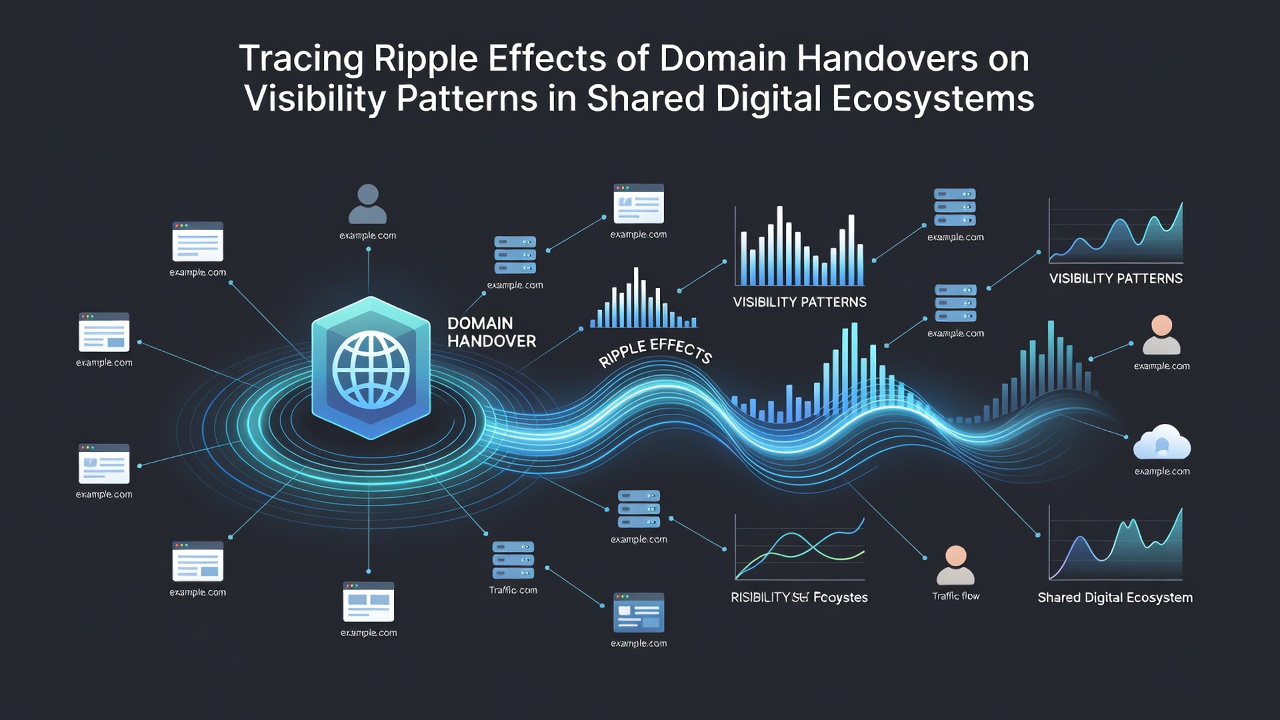
Domain handovers occur when ownership of a web address transfers between parties, and these shifts often trigger measurable changes in how content appears within search results and related online spaces. Observers note that such transfers alter DNS records, indexing signals, and referral pathways, which in turn influence exposure levels across platforms that share user data or link structures. Research from multiple regions shows that even minor configuration updates during a handover can delay crawler access for weeks, while simultaneous adjustments to canonical tags compound the delay in federated environments where content replicates across instances. Studies conducted by academic teams at European institutions have tracked these patterns through longitudinal monitoring of domain transfers completed between 2023 and 2025. The findings indicate that visibility metrics such as impression share and referral traffic frequently drop by double-digit percentages in the immediate aftermath, then stabilize once new ownership records propagate through global registries. Meanwhile, shared digital ecosystems, including content distribution networks and collaborative publishing tools, experience secondary effects because cached references and embedded links continue pointing to outdated ownership metadata until manual refreshes occur.Mechanisms Behind Visibility Shifts
Technical adjustments required during a handover include updates to name servers, WHOIS data, and SSL certificates, each of which search engines and aggregators monitor independently. Data from ICANN-coordinated registry reports reveals that propagation times vary by top-level domain, with certain country-code extensions taking longer to reflect changes across distributed caches. Those who monitor these ecosystems find that platforms relying on real-time federation notice disruptions first, because their indexing relies on frequent polling of origin domains rather than static snapshots.
One documented sequence shows a content-sharing network experiencing a 22 percent reduction in indexed pages from transferred domains within the first ten days, followed by partial recovery once new authority signals accumulated. Researchers attribute the rebound to renewed crawl budgets granted after ownership verification completes, although full restoration often requires coordinated efforts across multiple linked services.
Patterns Observed in Interconnected Networks
Shared digital ecosystems amplify the initial disruption because content duplication across nodes creates redundant pathways that must all update before consistent visibility returns. Figures released by Canadian digital infrastructure studies in late 2025 highlight that ecosystems built on ActivityPub protocols display slower recovery curves compared with centralized repositories, since each participating server validates domain changes individually. This decentralized verification process, while enhancing resilience, extends the period during which search engines treat some replicas as lower-priority sources.
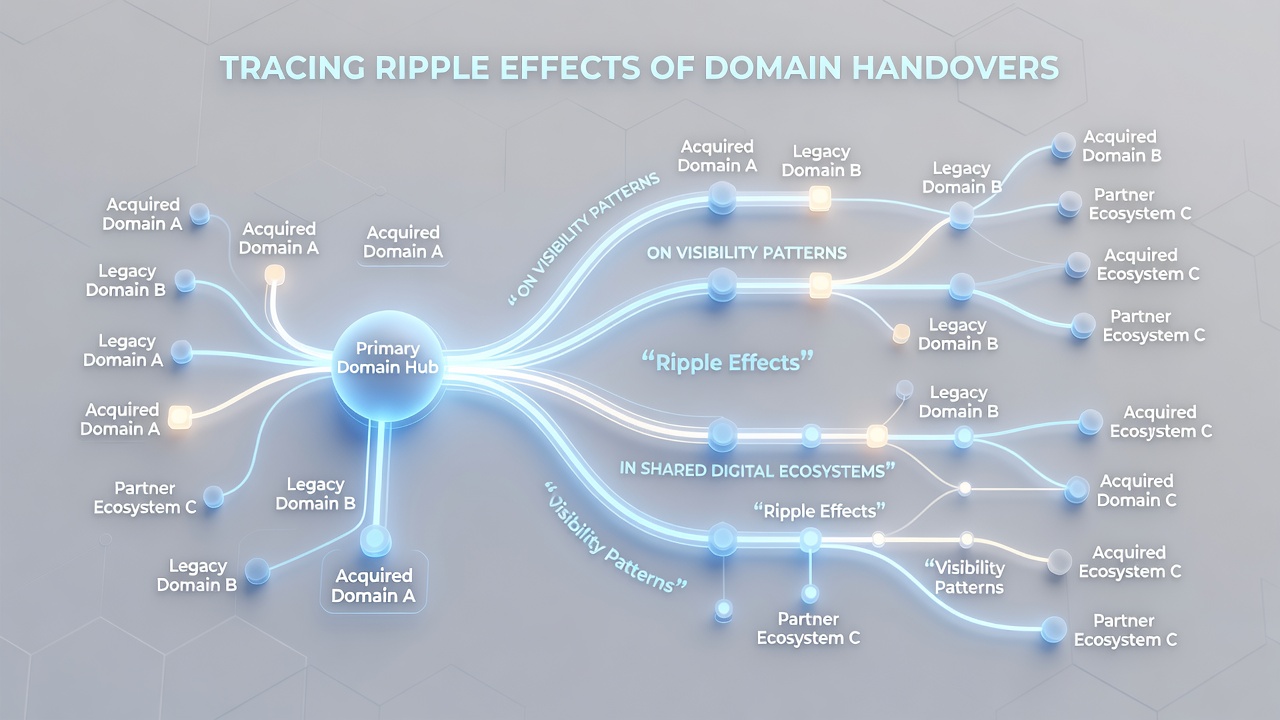
October 2026 brought additional attention to these dynamics when several large-scale domain portfolio reallocations coincided with updates to crawler behavior announced by major engines. Monitoring services recorded temporary visibility gaps that lasted between fourteen and thirty-one days, depending on the number of interconnected services involved. Observers tracking these events note that ecosystems with pre-established redirect chains recovered faster, whereas those relying solely on DNS updates encountered extended periods of reduced exposure.
Measurement Approaches adn Data Sources
Analysts employ server logs, third-party indexing tools, and API queries to quantify ripple effects across visibility layers. Reports compiled by Australian academic consortia demonstrate that combining these data streams produces more accurate timelines of recovery than any single metric alone. The approach captures both direct ranking movements and indirect signals such as reduced mentions in aggregated feeds that draw from the affected domains.
Those examining multi-year datasets find that handovers involving high-authority domains generate broader secondary effects within shared ecosystems, because numerous external references must be re-evaluated. In contrast, transfers of low-traffic addresses tend to remain localized unless the new owner introduces substantial content changes that alter crawl frequency.
Conclusion
Domain handovers continue to produce traceable shifts in visibility patterns that extend through shared digital ecosystems, with recovery timelines shaped by technical configuration choices and the degree of interconnection among participating platforms. Evidence accumulated through registry data, academic monitoring, and infrastructure studies shows consistent sequences of initial decline followed by gradual restoration, modulated by the timing of verification processes. As ecosystem architectures evolve, the same monitoring methods applied in prior years provide the factual baseline for understanding future transfer events and their measurable consequences.